Urban Chaos – How to Play It Today and Whether It Is Worth It
Availability checked on:
Quick verdict
- Recommended version
- Current PC release, with GOG slightly preferred for DRM-free access and Steam as a valid alternative for Steam-library users.
- Best low-friction option
- Same as best current option: buy the current PC version on GOG or Steam.
- Best purist option
- Original PC version via current PC storefront; no distinct console purist option is worth recommending to most readers today.
- Technical friction
- Moderate
- Gameplay friction
- Moderate
- Beginner-friendly
- Mostly
How to play it today
The practical legal route for Urban Chaos today is the current PC release. Steam and GOG were the verified storefront options in the research pass. No current official PlayStation, Dreamcast, console subscription, or modern collection route was verified.
For most players, start with the GOG PC release. It is the cleaner recommendation if you value DRM-free access and classic-game ownership. Steam is also a reasonable option if that is where you keep your PC library.
The old PlayStation and Dreamcast versions matter historically, but they are not the sensible starting point for a normal modern player. Without a verified current official digital route, they mostly add hardware and collector friction.
Where you can play it today
Current GOG PC release
YesOfficial release
PC
Legal, accessible, DRM-free-oriented PC route with classic-game purchase expectations.
Still an old PC game, so compatibility and display troubleshooting may vary by system.
Best for: Most modern players who want the cleanest legal route.
Current Steam PC release
YesOfficial release
PC
Easy purchase and library management for Steam users.
Less attractive than GOG for players who prioritize DRM-free ownership, and compatibility expectations should still be kept conservative.
Best for: Players who keep their PC library primarily on Steam.
Original PlayStation version
NoOriginal hardware
PlayStation
Relevant for original-console purists and historical comparison.
No verified current official digital route, and the hardware path is more cumbersome than the PC release for normal players.
Best for: Collectors and original-hardware enthusiasts.
Dreamcast version
NoOriginal hardware
Dreamcast
Interesting as a period console port for Dreamcast enthusiasts.
No verified current official digital route, and physical hardware access is collector friction.
Best for: Dreamcast enthusiasts only.
Why this is the recommended version
The current PC release wins because it solves the main access problem without asking the reader to hunt down original hardware. It is also closest to the version that makes sense for a modern setup, even if the game itself remains old and sometimes awkward.
The choice between GOG and Steam is not a major content split based on the verified information. It is a convenience and ownership tradeoff. Choose GOG if DRM-free access matters. Choose Steam if you prefer Steam library management. Either way, keep expectations conservative: this is still a 1999 PC game, and some players may run into display or compatibility quirks.
The console versions do not offer enough practical upside to change the recommendation. They are useful for enthusiasts comparing ports, not for readers who simply want to know how to play Urban Chaos today.
Play Today Framework
Controls and core mechanics
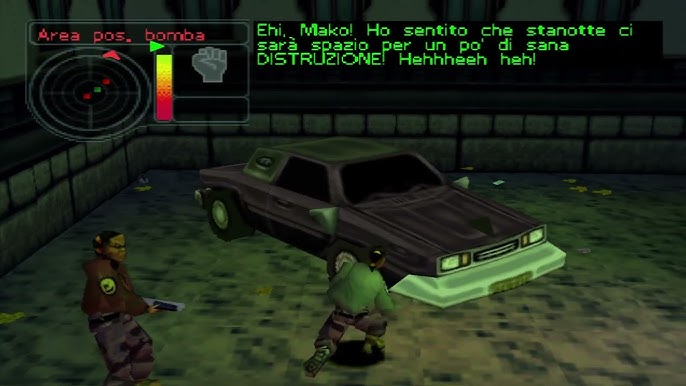
Urban Chaos is easier to appreciate if you approach it as a transitional action-adventure rather than a modern open-world game. It mixes third-person movement, melee fighting, shooting, stealth, driving, and mission objectives, but those pieces do not have the consistency or polish that later players may expect.
The first adjustment is control feel. Movement and combat can feel stiff, especially if you are used to later third-person action games. Do not judge the whole game in the first few minutes. Give yourself enough time to understand how it expects you to move, fight, and read mission spaces.
The second adjustment is mechanical expectation. Urban Chaos is not only a shooter, not only a beat-’em-up, and not only an open-city game. It is an ambitious mixture, and that ambition is both the reason to play it and the reason it can feel uneven. When the game asks you to use stealth, positioning, melee, firearms, or vehicles, treat those as rough tools rather than as modern refined systems.
A full walkthrough should not be necessary for most readers. What helps more is a short setup check, patience with the controls, and a willingness to retry missions while learning how the game communicates danger and objectives.
What to know before starting
- Difficulty
- Moderate, mostly because the controls and mission readability can feel old rather than because the game is simply hard.
- Pacing
- Uneven, with ambitious open-area missions mixed with dated combat, movement, and trial-and-error moments.
- Do you need a guide?
- Setup help and a short controls/core-mechanics primer are more useful than a full walkthrough.
- Good starting point?
- Yes, if you specifically want an ambitious late-1990s urban action-adventure and are willing to meet it halfway.
Do not start Urban Chaos expecting a modern open-world action game. Start it as a transitional, experimental 1999 PC action-adventure. The value is in seeing how much it tries to do, not in how smoothly every system works now. A short adjustment period for movement, combat, stealth, and mission structure is part of the experience.
Is it still worth playing?
Urban Chaos is still worth playing for a specific kind of reader: someone curious about ambitious late-1990s PC action games and the period before open-world design became standardized. Its value today is not that it feels modern. Its value is that it tried to combine city spaces, action systems, and mission structure in ways that were unusual for its time.
That does not make it an easy recommendation for everyone. If you want a smooth, readable, responsive action game, this is likely to feel too rough. The controls, combat, and mission friction can be the main experience rather than a small inconvenience.
The best verdict is selective. Play it if historical curiosity and unusual design are part of the appeal. Skip it if you mainly want comfort, polish, or a friction-light retro game.
Who this is for
Urban Chaos is for players who enjoy rough but ambitious transitional games. It is a better fit for retro-curious players who can tolerate dated controls than for casual players looking for a comfortable weekend recommendation.
It is also for readers who want to understand a particular moment in urban action game design. If that context does not interest you, the friction will probably outweigh the reward.
FAQ
Is Urban Chaos the same as Urban Chaos: Riot Response?
No. Treat Urban Chaos and Urban Chaos: Riot Response as separate games. Riot Response may appear in searches because of the shared name, but it should not be used as the default replacement recommendation for this page.
Should I buy Urban Chaos on GOG or Steam?
Most players should choose GOG if DRM-free access matters and Steam if they prefer keeping everything in a Steam library. The main recommendation is the current PC release, not a specific console version.
Do I need fan patches?
Do not assume that a fan patch is mandatory without checking your own setup. The safer advice is that some modern PC players may want compatibility or widescreen troubleshooting, but the page should not claim a required patch unless that is freshly verified.
Are the PlayStation or Dreamcast versions better?
Not for most people today. They are historically relevant, but they were not verified as current official digital options and are mainly for original-hardware enthusiasts.
Availability note
This page is based on a research check from April 24, 2026. At that time, PC availability through Steam and GOG was the verified legal route. Current console availability, subscription inclusion, Steam Deck support, controller support, and required fan patches were not verified and should not be assumed.
Before buying, check the storefront in your own region. Classic-game listings can change, and compatibility notes can become outdated.