Quartet – How to Play It Today and Whether It Is Worth It
Availability checked on:
Quick verdict
- Recommended version
- Quartet for Master System inside Lost Judgment, only if you already own Lost Judgment or also want the larger game
- Best low-friction option
- Same as best current option
- Best purist option
- Original arcade Quartet if legally accessible; otherwise Quartet 2 on Astro City Mini with caveats
- Technical friction
- Moderate
- Gameplay friction
- Moderate
- Beginner-friendly
- No
How to play it today
The easiest legal way to play Quartet today is through Lost Judgment, which includes the Master System version of Quartet as a playable bonus. That is the best current path for most people, but with an important caveat: this is not the original four-player arcade version.
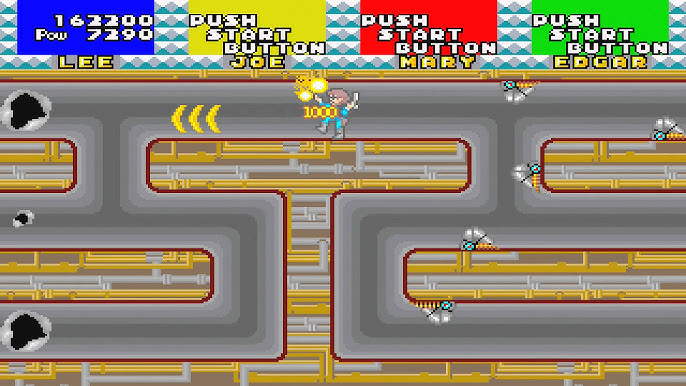
That caveat matters. Quartet began as a 1986 Sega arcade game, and its identity is tied to that arcade setup. The version most players can reach now through Lost Judgment is a home-console conversion. It is still a legitimate way to sample Quartet, but it is not the full purist version.
There is no clean standalone modern listing for the original arcade Quartet that should be treated as the normal recommendation. If you already own Lost Judgment, or you wanted to play Lost Judgment anyway, the included Master System version is the sensible route. If you are thinking of buying Lost Judgment only for Quartet, that is much harder to justify.
For enthusiasts, there are other official routes, but they are not simpler. Astro City Mini includes Quartet 2, which is relevant for Sega arcade fans, but it is dedicated mini hardware and not the same as the original Quartet. Original arcade access is the purist answer, but it is not a realistic home recommendation for most readers.
Where you can play it today
Quartet, original arcade release
NoOriginal hardware
Arcade
The source version, with the defining four-player arcade setup and original pacing.
No clean standalone modern official listing was found, and arcade access is unrealistic for most readers.
Best for: Arcade purists and Sega preservation-minded players.
Quartet, Master System version inside Lost Judgment
SelectivelyOfficial release
PlayStation, Xbox, PC through Lost Judgment
The easiest current legal way for many players to access a playable Quartet version.
It is a two-player Master System conversion, not the original four-player arcade game, and it is embedded inside a larger action-adventure game.
Best for: Readers who already own Lost Judgment or want to play it anyway.
Quartet 2 on Astro City Mini
SelectivelyCompilation
Astro City Mini
Official Sega mini-hardware route with an arcade-style library.
It is Quartet 2 rather than the original Quartet, and hardware availability is not low-friction.
Best for: Sega arcade enthusiasts who already own or can reasonably obtain the hardware.
Quartet, Master System cartridge
NoOriginal hardware
Master System
Legitimate original home-hardware route for Master System purists.
Old hardware, cartridge access, and a reduced home conversion make it hard to recommend over the Lost Judgment route.
Best for: Master System collectors and hardware purists.
Why this is the recommended version
The Lost Judgment route is recommended because it is the lowest-friction legal option that does not require original arcade hardware, Master System hardware, or specialist mini-console availability. It lets a modern player sample Quartet without turning one short arcade curiosity into a hardware project.
The tradeoff is clear: convenience beats faithfulness here.
The Master System version is not the arcade original. It does not carry the same four-player identity, and it should not be sold to readers as the definitive Quartet experience. But it is accessible through a current game on modern platforms, and that makes it the best practical option for most people who are simply curious.
Purists should choose differently if they have the means. The arcade original is the reference version. Astro City Mini’s Quartet 2 is also more interesting to Sega arcade enthusiasts than the Master System conversion, but it comes with its own compromises: it is Quartet 2, not Quartet, and the hardware route is not low-friction.
For everyone else, the recommendation is narrower. Play the Master System version through Lost Judgment if it is already in front of you. Do not chase Quartet at significant cost unless Sega arcade history is the reason you are here.
Play Today Framework
What to know before starting
- Difficulty
- Moderate
- Pacing
- Short arcade stages built around enemy pressure, bosses, keys, and exits.
- Do you need a guide?
- No walkthrough needed; a controls and core mechanics primer is enough.
- Good starting point?
- Only if access is easy through Lost Judgment or if you have specific Sega arcade interest.
Start by treating Quartet as an arcade loop, not a modern campaign. Shoot through enemy pressure, watch for power-ups, defeat the stage boss, grab the key, and reach the exit. The biggest adjustment is not complexity. It is understanding that the easiest legal version most players can reach is the Master System conversion, which is not the original four-player arcade game.
Is it still worth playing?
Quartet is worth sampling, not chasing.
Its appeal today is historical and mechanical rather than essential. It is a neat Sega arcade curiosity, especially if you care about how mid-1980s arcade games handled shared-screen action and stage progression. The loop is direct, and the best moments come from its immediate arcade pressure.
For a modern first-time player, the problem is not that Quartet is impossible to understand. The problem is that the best legal route is indirect, and the easiest available version is not the arcade original. That weakens the recommendation considerably.
Play it if you already have Lost Judgment and want to try the bonus Sega games. Play it if you are specifically interested in Sega arcade history. Consider Quartet 2 on Astro City Mini only if you are already in that hardware ecosystem.
Skip it if you are just looking for a strong run-and-gun to play today. There are better-supported ways to scratch that itch. Quartet is interesting, but it is not important enough for most players to hunt down awkward access routes.
FAQ
Can I buy Quartet as a standalone modern release?
No clear standalone modern release of the original arcade Quartet is the recommended path here. The practical current route is the Master System version inside Lost Judgment.
Is the version in Lost Judgment the arcade version?
No. It is the Master System version. That makes it convenient, but not arcade-authentic.
Is Quartet worth buying Lost Judgment for?
Usually, no. Lost Judgment is the best route if you already own it or want the main game. Quartet alone is not enough reason for most players to buy a full modern game.
What about Quartet 2 on Astro City Mini?
Quartet 2 is relevant for Sega arcade enthusiasts, but it is not the original Quartet and it depends on dedicated mini hardware. Treat it as a specialist option, not the default recommendation.