Shao-Lin’s Road – How to Play It Today and Whether It Is Worth It
Availability checked on:
Quick verdict
- Recommended version
- Arcade Archives SHAO-LIN'S ROAD
- Best low-friction option
- Same as best current option
- Best purist option
- Original arcade hardware, or Arcade Archives with convenience options minimized
- Technical friction
- Low
- Gameplay friction
- Moderate
- Beginner-friendly
- Mostly
How to play it today
The best way to play Shao-Lin’s Road today is Arcade Archives SHAO-LIN’S ROAD on Nintendo Switch or PlayStation 4. That is the clear recommendation for most players because it gives the arcade game a current official route without asking you to track down old hardware, legacy computer ports, or obscure compilations.
The PlayStation 4 release may also be usable on PlayStation 5 through normal PS4 compatibility, but treat that as a platform-store detail to check before buying. For most readers, the decision is simple: choose the Arcade Archives version on the system you already use.
There are older ways to encounter the game. Shao-Lin’s Road is also known as Kicker, and older home-computer ports exist. Original arcade hardware is the purist route. Those paths are mainly for collectors, preservation-minded players, or people comparing historical conversions. They are not better starting points for a normal modern player.
Where you can play it today
Arcade Archives SHAO-LIN'S ROAD
YesOfficial release
Nintendo Switch, PlayStation 4, PlayStation 5 via PS4 compatibility where supported
Current official route with Arcade Archives settings, display options, and online rankings.
It remains an arcade-era action game with short-session pressure and old-school punishment.
Best for: Most modern players who want to play Shao-Lin's Road legally with low setup friction.
Shao-Lin's Road / Kicker, original arcade hardware
SelectivelyOriginal hardware
Arcade
Authentic arcade presentation and cabinet-era rhythm.
Impractical for most readers compared with Arcade Archives.
Best for: Arcade purists, operators, and preservation-focused players.
Shao-Lin's Road / Kicker, home-computer ports
SelectivelyOfficial release
Commodore 64, ZX Spectrum, Amstrad CPC
Historically relevant adaptations for 8-bit computer enthusiasts.
Old-hardware and conversion-quality friction make them weaker starting points than Arcade Archives.
Best for: Home-computer collectors and players comparing historical conversions.
Older Konami compilation appearances
SelectivelyCompilation
Legacy platforms
Useful for readers who already own legitimate legacy compilation copies.
Less convenient than Arcade Archives and not the current default route.
Best for: Existing owners of older official compilations.
Why this is the recommended version
Arcade Archives is recommended because it solves the biggest modern problem: access. Shao-Lin’s Road is a 1985 arcade game, and without a current arcade reissue, it would mostly live in the awkward space of old machines, old ports, and scattered legacy appearances. Arcade Archives puts the arcade game on modern storefronts and makes it easy to start.
The other reason is clarity. This is not a game where most people need to compare a remake, a remaster, and several modern editions. The arcade version is the reference point, and Arcade Archives is the practical way to play it. Original hardware may be more authentic, but that difference matters only if authenticity is the entire reason you are playing.
The tradeoff is that Arcade Archives does not turn Shao-Lin’s Road into a modern action game. It remains a short, score-minded arcade release. The wrapper helps with presentation and convenience, but the design underneath is still old-school: fast failure, simple rules, repeated attempts, and pressure to improve through timing rather than through upgrades or long-form progression.
That is a good thing if you want a compact Konami arcade game. It is a bad fit if you are expecting a long beat ’em up, a one-on-one fighting game, or a martial-arts adventure with modern pacing.
Play Today Framework
What to know before starting
- Difficulty
- Moderate
- Pacing
- Short arcade stages with quick punishment, enemy waves, and score-minded repetition.
- Do you need a guide?
- Basic controls and core-mechanics help is useful; a walkthrough is not necessary.
- Good starting point?
- Yes, if played through Arcade Archives and treated as a short arcade action game.
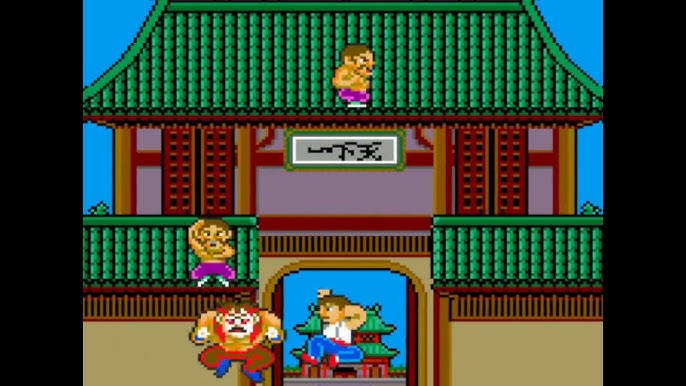
Start with the Arcade Archives version on the modern platform you already use. Expect a compact arcade game about movement, timing, and survival, not a long martial-arts adventure. Learn how platform movement, kicks, enemy waves, and short-lived power-ups interact before judging it. The game is simple to understand, but it punishes careless positioning quickly.
Is it still worth playing?
Yes, with caveats. Shao-Lin’s Road is worth playing today if you like short arcade games, early Konami action design, or martial-arts games that sit outside the usual one-on-one fighting template. It is easy to sample through Arcade Archives, and that helps its case a lot.
It is not essential for everyone. Modern players looking for a richer martial-arts game will probably find it too small and repetitive. Players expecting a brawler may wonder why the action feels so compact. Fighting-game fans may find the mechanics interesting as an arcade curiosity, but not deep enough to become a long-term recommendation.
The strongest reason to try it is that it has a clean, legal, low-friction version and a distinct arcade rhythm. You can play a few runs, understand the idea, and decide quickly whether it clicks. That is exactly the kind of game that benefits from a modern arcade wrapper.
The reason to skip it is just as clear: if you want depth, campaign structure, character progression, or polished modern martial-arts combat, this is not that game. Treat it as a compact historical arcade action piece, not as a lost masterpiece.
FAQ
Is Shao-Lin’s Road the same game as Kicker?
Yes, Kicker is an alternate title associated with the same arcade game. The modern Arcade Archives release uses the Shao-Lin’s Road name.
Should I play the Arcade Archives version?
Yes. For most players, Arcade Archives is the practical version to start with because it is current, legal, and based on the arcade game.
Is Shao-Lin’s Road a fighting game?
Not in the modern one-on-one sense. It is better understood as a martial-arts arcade action-platformer built around movement, timing, and enemy waves.
Is it worth playing if I already like Yie Ar Kung-Fu?
Probably, but go in expecting a different structure. Yie Ar Kung-Fu is the clearer fighting-game comparison, while Shao-Lin’s Road is more about platform positioning and quick arcade survival.
Availability note
Storefront availability can vary by country or region. Check your local Nintendo or PlayStation store before buying, especially if you are looking for Shao-Lin’s Road specifically rather than a different Konami martial-arts game or an older home-computer version.