Stack-Up – How to Play It Today and Whether It Is Worth It
Availability checked on:
Quick verdict
- Recommended version
- No good legal mainstream option verified; original NES or Famicom setup only for purists
- Best low-friction option
- No distinct low-friction alternative
- Best purist option
- Original NES or Famicom setup with a legal copy, working R.O.B., and the complete block accessory set
- Technical friction
- Very High
- Gameplay friction
- High
- Beginner-friendly
- No
How to play it today
Stack-Up is not a practical modern recommendation for most players. There is no good low-friction digital route for the game, and the full experience is not just the cartridge. To play it properly, you need a legal NES or Famicom copy, compatible hardware, a working R.O.B., and the physical block accessories that make the game function as intended.
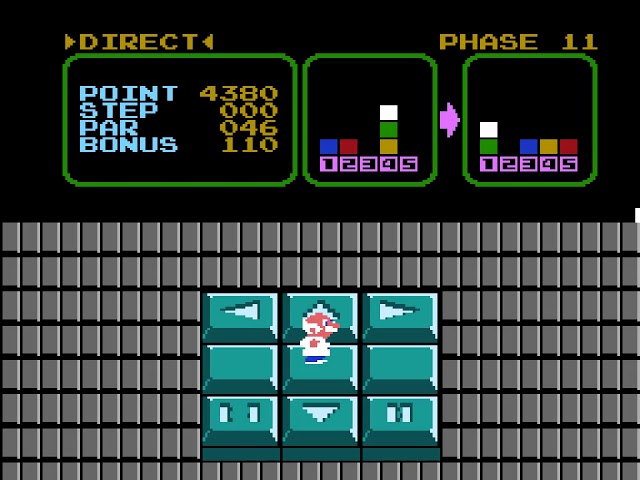
That last point is the key. Stack-Up is not a normal puzzle game that merely happens to support an optional accessory. The game was built around R.O.B. moving real blocks in response to commands sent through the game. Without the robot and the complete block setup, you are missing the reason the game exists.
For most modern players, the honest answer is to skip playing Stack-Up and treat it as a preservation curiosity. It is fascinating as Nintendo hardware history, but it is a poor casual starting point for NES puzzle games. Nintendo’s modern classic-game service is the natural place many readers will check, but it should not be treated as a solution for Stack-Up unless the game is actually listed in your local library.
The purist path is the only meaningful path: an original NES or Famicom setup with a legal copy and complete R.O.B. accessories. That is expensive, fragile, and slow compared with almost any normal retro setup. It is also the only route that preserves what makes Stack-Up distinctive.
Where you can play it today
Stack-Up
SelectivelyOriginal hardware
Nintendo Entertainment System
The authentic North American R.O.B. block-stacking experience.
Requires the cartridge, R.O.B., hands, trays, blocks, and a working setup.
Best for: NES hardware historians, R.O.B. collectors, and preservation-focused players.
Family Computer Robot: Block Set
SelectivelyOriginal hardware
Family Computer
The Japanese Robot Block context for the same physical concept.
Adds import hardware and accessory friction for most readers.
Best for: Famicom collectors and readers researching the Japanese Robot line.
Nintendo Entertainment System: Nintendo Classics
NoSubscription
Nintendo Switch
A low-friction legal route for many NES games.
Stack-Up is not a practical current route through this library, and the service would not recreate the physical R.O.B. block interaction.
Best for: Players who want other NES games legally today, not Stack-Up specifically.
R.O.B. hardware demonstration
SelectivelyOriginal hardware
NES or Famicom with R.O.B.
Preserves the point of Stack-Up: the robot responding to the game and moving physical blocks.
Not a normal consumer setup and dependent on complete working hardware.
Best for: Exhibitions, preservation projects, collectors, and content creators.
Why this is the recommended version
There is no modern version to recommend over the original because the hardware is the point. With many old games, a modern collection, subscription release, or digital storefront version can preserve enough of the experience to become the obvious choice. Stack-Up is different. The software is only the control layer for a physical robot puzzle.
That makes the recommendation unusually blunt. If you want to understand Stack-Up as a game, you need the real R.O.B. setup, or at least access to a working demonstration. If you only want to play a good NES puzzle game, Stack-Up is not the best use of your time.
The NES version is the main reference point for North American readers. Family Computer Robot: Block Set is the Japanese context for the same broad idea. Both are specialist routes today. Neither is a comfortable recommendation for someone who wants to sit down, buy a game, and start playing within minutes.
This is why the best modern answer is not “buy this version.” It is: only pursue Stack-Up if you specifically care about R.O.B. as hardware. For everyone else, read about it, watch a legitimate hardware demonstration, or play a more accessible NES game instead.
Play Today Framework
What to know before starting
- Difficulty
- Hardware-dependent
- Pacing
- Slow and procedural
- Do you need a guide?
- Setup help is more important than puzzle help
- Good starting point?
- No
Do not approach Stack-Up as a normal NES puzzle game. The software is only part of the experience. The real appeal is commanding R.O.B. to move physical blocks, which means a proper setup matters more than skill with the controller. Missing accessories, an unreliable robot, or an unsuitable display can make the game feel incomplete.
Is it still worth playing?
For most players, no. Stack-Up is more important as an object of Nintendo history than as a game worth actively chasing today. It shows how far Nintendo was willing to go to make the NES look different in the mid-1980s, and it remains one of the clearest examples of software designed around R.O.B.
That does not make it a satisfying modern recommendation. The pace is slow. The setup is demanding. The software alone is not especially rewarding. If your goal is to enjoy a retro puzzle game, there are better and easier choices. If your goal is to understand R.O.B., Stack-Up is valuable.
The right audience is narrow: NES hardware historians, R.O.B. collectors, preservation projects, museums, and players who enjoy seeing strange design experiments in their original context. For everyone else, Stack-Up is better learned about than played.
FAQ
Can I buy Stack-Up digitally today?
There is no good mainstream digital route to recommend. Treat the original hardware setup as the meaningful way to experience it.
Is Stack-Up on Nintendo Switch Online or Nintendo Classics?
Do not assume it is included. Check your local Nintendo Classics library before making plans around it.
Do I need R.O.B. to play Stack-Up properly?
Yes, for the full experience. The point of Stack-Up is commanding R.O.B. to manipulate physical blocks.
Is Stack-Up worth playing, or just collecting?
For most people, it is more valuable as a hardware-history piece than as a game to play for fun.
What is the best alternative?
Gyromite is the natural companion topic if you are interested in R.O.B. Normal NES puzzle fans should choose a more accessible NES game instead.
Availability note
Digital libraries and subscription catalogs can change, so check your local Nintendo store or service library before assuming anything. If you want the real Stack-Up experience, stick to legal copies and hardware you can actually use. Unofficial downloads are not a recommended route, and the software alone does not replace R.O.B. or the physical block accessories.