X-Men: Mutant Academy 2 – How To Play It Today
Availability checked on:
Quick verdict
- Recommended version
- Original PlayStation disc
- Best low-friction option
- No distinct recommendation.
- Best purist option
- Original PlayStation disc on compatible legacy hardware.
- Technical friction
- Moderate
- Gameplay friction
- Moderate
- Beginner-friendly
- No
How to play it today
The best legal path for the exact game is an original PlayStation disc on compatible legacy hardware. That is the recommendation only because no currently verified mainstream official listing for X-Men: Mutant Academy 2 was found at the time of checking. For most readers, that is also the point where the recommendation changes. If you mainly want an X-Men fighting game you can buy and play without hassle, the better option is MARVEL vs. CAPCOM Fighting Collection: Arcade Classics, which the dossier verified as a current official release and which includes stronger X-Men fighters.
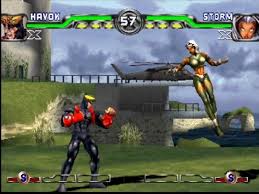
Where you can play it today
Original PlayStation release
SelectivelyOriginal hardware
PlayStation disc on compatible legacy hardware
It improves on the first Mutant Academy and remains readable as a casual one-on-one fighter.
Legal access is awkward now, and the combat system lacks the depth of better fighters.
Best for: Readers who specifically want this PS1 sequel or a short casual local fighter.
Why this is the recommended version
There is no real version choice to solve inside the game itself. The original PlayStation release is the only meaningful version identified in research, so it becomes the default by elimination. It is also the right place to judge the game fairly, because it does improve on the first Mutant Academy and it does enough to function as a readable, casual one-on-one fighter. The tradeoff is that you are accepting access friction for a game that is merely decent. This is not a case where the right version unlocks a great modern recommendation. It only gives you the clearest form of a selective nostalgia play.
Play Today Framework
Controls and core mechanics
The most useful way to start is to lower your expectations about depth and raise your focus on clarity. Mutant Academy 2 works better when you treat it as a simple character-based fighter with familiar special-move logic, not as a system-heavy game built for long-term mastery. Pick one character you already like, learn a few reliable normals, then add a small number of specials you can perform consistently. That gets you to the game’s real strengths much faster than chasing long combo routes.
The main problem is that the system can look richer than it really is. The roster and comic-book presentation suggest something bigger, but the game gives back its value quickly. If you approach it like a casual local fighter, it is easier to enjoy. If you approach it like a serious competitive game, the limits show up fast. That is why move-list and combo queries matter here. A first-time player does not need a complete command dump. They need permission to keep it simple.
You also do not need to force advanced play to judge the game. Spend a little time with movement, block timing, and the feel of your safest attacks. That is enough to tell whether the combat loop works for you. If it does not click by then, the answer usually is not keep grinding. The answer is that the game has probably already shown you what it has.
What to know before starting
- Difficulty
- Easy to read, but not especially deep.
- Pacing
- Best in short sessions rather than long mastery-focused play.
- Do you need a guide?
- Light mechanics guidance helps. Full route advice is unnecessary.
- Good starting point?
- No. Start here only if you specifically want this sequel.
Treat this as a simple, casual X-Men fighter, not as a deep long-term fighting-game commitment. The quickest path to enjoying it is to use a few reliable normals and specials, learn how movement feels, and stop expecting the system to open into something much richer later.
Is it still worth playing?
Yes, if you have a specific reason to want this exact PS1 sequel. It remains a cleaner and more enjoyable game than the first Mutant Academy, and it can still provide a good evening of casual versus play if you care about this cast and this era. What still works best is its immediate readability. You can understand the basic structure quickly, pick a favourite character, and start getting usable matches without much setup.
Less so if you are looking for the best X-Men fighter to play today, or even a strong starting point for Marvel fighting games more broadly. The access friction is real, and the payoff is limited. Better official options are easier to buy right now, and they lead to stronger games with better long-term value. This makes Mutant Academy 2 more useful as a targeted curiosity than as a smart default recommendation.
Who this is for
- You should play it if you specifically want the PS1 Mutant Academy sequel.
- You should play it if you want a casual X-Men fighter rather than a deep one.
- You should play it if you already have easy access to compatible legacy hardware.
- You may want to skip it if you want the easiest legal way to play an X-Men fighter today.
- You may want to skip it if you are looking for a deep fighting-game system to learn.
- You may want to skip it if you are choosing your first X-Men fighting game.
- You may want to skip it if you do not want to source old hardware and discs.
FAQ
Is there any verified official digital version today? No currently verified official mainstream listing for the exact game was found at the time of checking.
Is this better than the first Mutant Academy? Yes. The dossier’s clear direction is that it is more polished and more enjoyable, but that still does not make it the best starting point for most readers now.
Do I need long combo strings to enjoy it? No. The better approach is to learn a few dependable attacks and basic specials, then judge the game on how the matches feel.
Is this a good starting point for modern players who want an X-Men fighter? Not really. The dossier’s recommendation is to start elsewhere unless you specifically want this sequel.
What is the better current legal alternative? MARVEL vs. CAPCOM Fighting Collection: Arcade Classics is the better current legal entry point if your real goal is simply to play a strong X-Men fighting game on current hardware.
Availability note
This page focuses on legal and realistically accessible ways to play the game today. When emulation is mentioned, it is treated as a technical category of play, not as an invitation to obtain unauthorized copies.
No currently verified official listing was found at the time of checking.