Solaris – How to Play It Today and Whether It Is Worth It
Availability checked on:
Quick verdict
- Recommended version
- Atari 50: The Anniversary Celebration
- Best low-friction option
- Atari 50: The Anniversary Celebration on the reader's preferred modern platform
- Best purist option
- Original Atari 2600 cartridge on original hardware, or cartridge hardware after checking compatibility
- Technical friction
- Low
- Gameplay friction
- Moderate
- Beginner-friendly
- Mostly
How to play it today
The best way to play Solaris legally today is through Atari 50: The Anniversary Celebration. Solaris is included in the collection’s Atari 2600 lineup, and the collection is the easiest modern route on mainstream platforms.
That is the practical answer for most players. Do not start by hunting for an original cartridge unless you specifically want a hardware experience. Do not buy an expanded Atari 50 package for Solaris alone either. The base Atari 50 release already covers the important part for this game.
A vintage Atari 2600 cartridge is still the purist route, but it changes the problem. You need the cartridge, suitable hardware, a way to connect it to your display, and some tolerance for a game that expects you to read and learn before it fully makes sense. Modern cartridge hardware can make that setup easier for some players, but check compatibility before buying anything specifically for Solaris.
For almost everyone else, choose Atari 50 and spend your energy learning the game rather than building a setup around it.
Where you can play it today
Atari 50: The Anniversary Celebration
YesCompilation
PC, Nintendo Switch, PlayStation, and Xbox storefronts
The clean mainstream legal option, with Solaris included in the Atari 2600 lineup.
Solaris is bundled inside a collection rather than sold as a standalone modern purchase.
Best for: Most players who want to try Solaris legally today.
Original Atari 2600 cartridge
SelectivelyOriginal hardware
Atari 2600 and compatible cartridge hardware
The authentic historical version and the purist choice.
Requires cartridge and hardware access, and offers no modern onboarding conveniences.
Best for: Atari hardware enthusiasts and purists.
Atari 50: Expanded Edition or Game plus DLC Bundle
YesCompilation
Modern Atari 50 platforms
Useful if the buyer wants the broader expanded Atari 50 package.
Not meaningfully better for Solaris itself because Solaris is already in the base Atari 50 lineup.
Best for: Players buying Atari 50 for the wider collection rather than Solaris alone.
Older plug-and-play or legacy collection appearances
SelectivelyOfficial release
Varies by device or collection
Potentially convenient for readers who already own the right device.
Model differences, availability, controls, and feature support make it a poor primary recommendation.
Best for: Existing owners only.
Why this is the recommended version
Atari 50 wins because it solves the biggest modern problem: legal access with low setup friction. Solaris is not a game that benefits most players by being harder to reach. Its challenge is in understanding how it works, not in proving you can source original equipment.
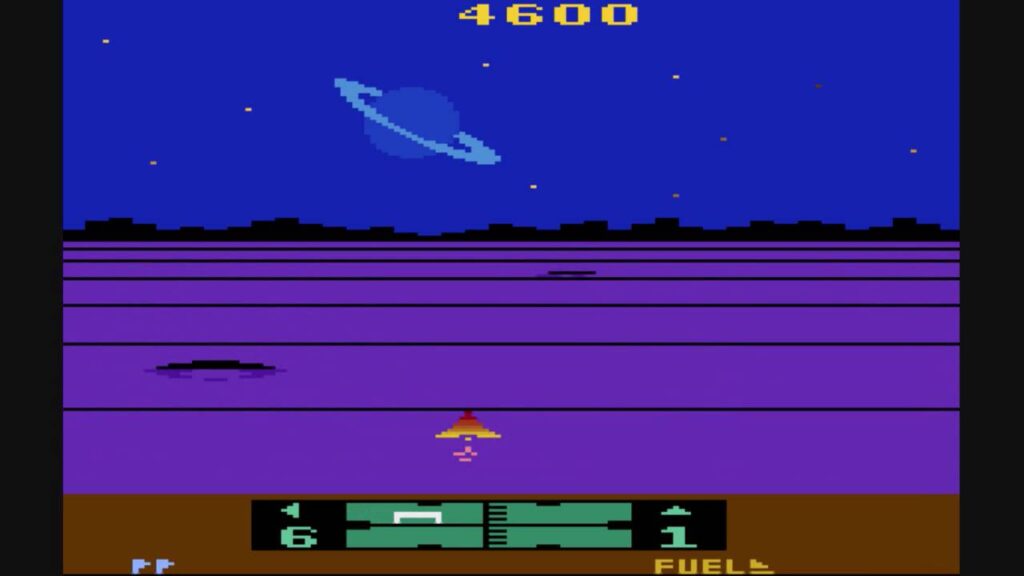
The collection also gives Solaris better context. This matters because Solaris can look like a simple Atari 2600 space shooter at first glance, but it is denser than that. It mixes combat, travel, scanning, fuel pressure, and map-based decision-making. Playing it from a modern collection makes it easier to treat the game as something to learn, not just a curiosity to boot once and abandon.
The compromise is that you are not buying Solaris as a standalone modern release. You are buying a broader Atari collection that happens to include it. In this case, that is not a serious drawback. Atari 50 is already the better practical purchase if you are interested in Atari history, and Solaris is exactly the kind of game that benefits from being presented inside a curated collection.
Purists should still consider the original cartridge. If authenticity is the goal, the Atari 2600 version on real hardware is the reference point. For a modern first-time player, though, the cartridge path is a specialist choice, not the sensible default.
Play Today Framework
What to know before starting
- Difficulty
- Moderate, mostly because the game is opaque rather than mechanically complex at first.
- Pacing
- Mission-driven and map-based, with bursts of combat between travel and scanning decisions.
- Do you need a guide?
- A short mechanics explanation is useful; a full walkthrough is not necessary for a first session.
- Good starting point?
- Good for retro-curious players after one or two simpler Atari 2600 games, not the best first Atari game overall.
Start by learning what the scanner is telling you, how sector movement works, and why fuel and Federation planets matter. Do not approach Solaris as a simple screen-by-screen shooter. It becomes more interesting when you treat travel and target choice as part of the game.
Is it still worth playing?
Solaris is still worth playing, but selectively. It is not the first Atari 2600 game most people should try, and it is not a smooth modern space-combat game. It is worth your time if you are curious about how ambitious a late Atari 2600 release could be.
That ambition is the main reason to play it. Solaris tries to be more than a score-chasing shooter. It gives you a mission, a navigational layer, and a sense that the space around you matters. For players interested in early design constraints, that is genuinely compelling.
The main reason to skip it is also clear: it is opaque. If you want a retro game that immediately explains itself through play, choose something else first. Yars’ Revenge, Adventure, or Asteroids are easier Atari starting points. Solaris works better after you already have some patience for old interface logic and abstract presentation.
The final recommendation is mixed but positive for the right reader. Play Solaris through Atari 50 if you want to explore one of the Atari 2600’s more ambitious games and you are willing to learn its systems. Skip it, or save it for later, if you want instant arcade clarity.